L
Lisa TongVerified review
A very positive experience
The referral form was emailed to me immediately, I walked into a collection centre the next morning and my results arrived the very next day. It made me feel they genuinely cared.
Recurring thrush, BV, discharge, odour or irritation, or just want to understand your vaginal microbiome better? Find out exactly which bacteria and yeasts are there from one swab collected at home.
How it works ↓Everything included. Kit, prepaid return, laboratory analysis and your full report, plus an optional free consult with our female doctor.
Add your free consult at checkout or skip it. Entirely up to you.
Trusted by 2,000+ women
How it works
Order online, collect your own swab at home and post it back. No consult, no clinic, no examination.

Get your at-home test kit in minutes. No appointment or referral needed to order a kit from us.

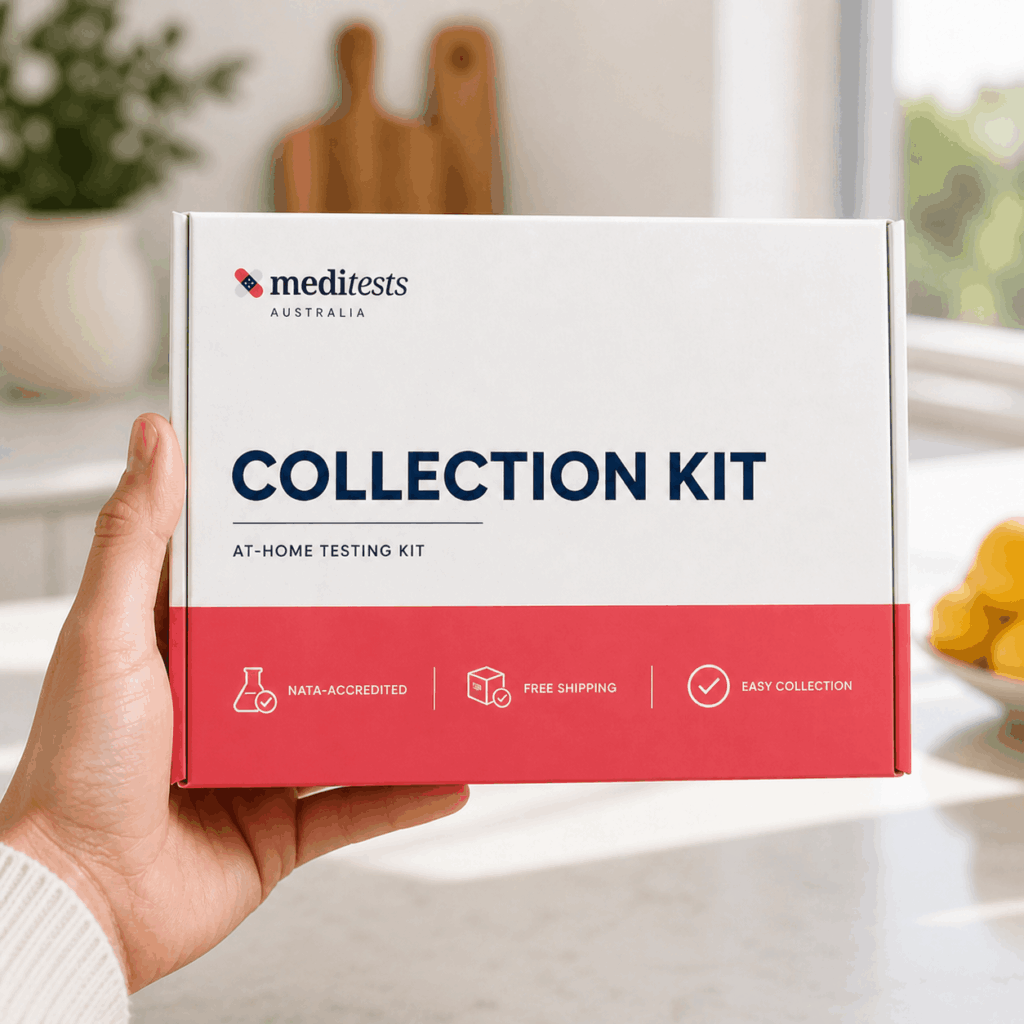
Get your kit in 2 to 3 business days, delivered in plain packaging with the swab, instructions and prepaid return included. A simple self-collection at home, then post it back.

Your full report is sent through to you, so you can start making changes to your health. If you like, an optional free consult with our female doctor takes it a step further.



Your vaginal microbiome is a dynamic ecosystem that shifts with your cycle, sexual activity, hormones and medications. Here is what mapping it actually tells you.
Quantitative PCR analysis of the bacteria, yeasts and pathogens present in your vaginal microbiome. It shows which species are dominant, which are depleted and which are overgrowing, at a depth a standard swab is not designed to reach.
A healthy vaginal microbiome is dominated by Lactobacillus. This panel measures your total Lactobacillus and eight individual species, including L. crispatus, L. iners, L. gasseri and L. jensenii, so you can see whether your protective layer is intact or thinned.
Candida albicans and the non-albicans Candida species, Gardnerella vaginalis, Atopobium vaginae, Mobiluncus, Mycoplasma, Ureaplasma and more. The organisms behind recurrent thrush, BV, unexplained discharge, itching and odour that one-question testing often does not cover.
Thrush that returns despite treatment. BV that comes back weeks after antibiotics. Discharge no swab has explained. Symptoms that flare at specific points in your cycle. This test shows the underlying microbial picture so the next conversation with your doctor starts from data.
Order online, self-collect at home, post it back in the prepaid envelope. No clinic visit, no speculum, no waiting room and no conversation you would rather not have. Your kit arrives in plain, unbranded packaging.
Five categories, mapped from one self-collected swab using quantitative PCR, so you see what is present, how much of it there is, and whether your protective bacteria are holding.
This panel checks the core markers of vaginal balance, so you can see whether your environment is acidic and Lactobacillus dominant the way it should be, or whether it has shifted in a direction that drives symptoms.
A healthy vaginal environment sits at about 3.5 to 4.5. A raised pH is one of the clearest early signals that the balance has shifted away from protective Lactobacillus species.
Reported as a positive or negative result. BV is a poly-microbial pattern where protective Lactobacillus is suppressed and anaerobes take over, and it is the most common cause of abnormal discharge and odour.
Reported as a positive or negative result. AV is a distinct pattern driven by aerobic bacteria of gut origin, and it is commonly confused with BV because the symptoms overlap.
Common vaginal STIs are screened directly from the same swab, so a symptom picture is not investigated in pieces. Symptoms can include abnormal discharge, itching or burning, pain during sex or urination, and sores or lesions.
Australia's most commonly notified STI. It is frequently asymptomatic, which is why screening matters even when nothing feels wrong.
The cause of gonorrhoea. Often silent in women, and a common contributor to abnormal discharge and pelvic symptoms.
A protozoan parasite associated with frothy discharge, irritation and odour. It is routinely missed by tests that only look at bacteria.
Screened directly from the swab, including genital presentations of the virus most people associate with cold sores.
The virus most commonly associated with genital herpes, detected by its DNA rather than by appearance alone.
An increasingly recognised STI linked with urethritis and cervicitis, and one that standard swabs frequently do not include.
The organism behind chancroid, a genital ulcer infection that is rare in Australia but important to exclude.
An invasive strain of Chlamydia trachomatis that behaves differently to standard chlamydia and is screened separately.
Screened as part of the panel. Syphilis notifications have risen in Australia, including among women of reproductive age.
Opportunistic microbes sit in small numbers in a healthy vagina. When acidity drops or Lactobacillus falls away, they multiply and start driving symptoms. This is where recurrent discharge, odour and irritation are usually explained.
The organism most closely associated with bacterial vaginosis. Quantified rather than simply present or absent, so you can see the scale of the overgrowth.
A BV-associated anaerobe often found alongside Gardnerella, and one linked with recurrence after treatment.
A specific BV marker organism that adds precision to the overall bacterial vaginosis picture.
Curved anaerobic rods characteristic of BV, screened alongside the other anaerobes in this group.
Anaerobes that thrive as vaginal pH rises and contribute to the odour associated with BV.
Highly specific BV-associated anaerobes that are strong indicators of a disrupted vaginal community.
Two Ureaplasma species screened separately. Both are common colonisers and both can contribute to symptoms when they overgrow.
A small bacterium frequently found alongside BV and linked with pelvic symptoms when it becomes dominant.
Anaerobic cocci that form part of the mixed overgrowth pattern seen in bacterial vaginosis.
A gut anaerobe that can colonise the vagina and contribute to a disrupted microbial balance.
A bowel organism that is a leading cause of urinary tract infection and a common finding in aerobic vaginitis.
Another organism of gut origin. Vaginal colonisation often rises after antibiotics or alongside aerobic vaginitis.
Routinely screened in pregnancy because of its relevance to newborns, and quantified here as part of the wider picture.
Three further streptococcal species screened for overgrowth that can drive inflammation and irritation.
Two staphylococcal species assessed together. S. aureus in particular is relevant to inflammatory vaginal symptoms.
An opportunistic organism associated with aerobic vaginitis and recurrent urinary symptoms.
A urea-splitting organism that raises pH further and is commonly linked with recurrent urinary tract infection.
A hardy opportunist screened for because it can persist and drive ongoing inflammation.
An opportunistic pathogen assessed as part of the aerobic group rather than assumed absent.
Filamentous bacteria that appear when the vaginal environment shifts away from Lactobacillus dominance.
Two viruses screened from the same swab, rounding out the picture beyond bacteria and fungi.
Candida species live harmlessly in most vaginas. Symptoms appear when one overgrows, and identifying which species is involved matters, because the non-albicans species behave differently to the common one.
The species behind most cases of thrush. Quantified rather than simply detected, so an incidental finding is not confused with an overgrowth.
A non-albicans species that often presents with milder symptoms and is a common finding when thrush keeps returning.
Another non-albicans species. Identifying it specifically changes the picture, because it behaves differently to C. albicans.
Screened as part of the full fungal assessment rather than assumed to be albicans.
A less common Candida species included so the fungal picture is complete.
Closely related to C. albicans and easily mistaken for it without species-level identification.
The final species in the fungal group, included to close out a complete yeast profile.
Lactobacillus species are the protective backbone of a healthy vaginal microbiome. They produce lactic acid and hydrogen peroxide to hold pH low and crowd out everything else. This tab shows whether your protective layer is intact or depleted.
The headline number. A healthy vaginal microbiome carries more than 1x10^6 CFU/ml. A low total is the single clearest sign your protective barrier has thinned.
Widely regarded as the most protective species of all, and strongly associated with a stable, resilient vaginal environment.
Another strongly protective species, measured individually rather than lumped into a single total.
A common protective species that contributes to acidity and stability.
Common but less stable than crispatus. A community dominated by iners is more prone to shifting, which is useful context when symptoms keep returning.
A vaginal Lactobacillus species measured as part of the full protective profile.
A species familiar from probiotics, quantified here so you can see whether it is actually present.
The final species in the beneficial group, completing the read on your protective bacteria.
Marker descriptions are general explanations to help you read your report, not a diagnosis. Microbiome testing reflects your microbial community at the time of sampling and is interpreted alongside your symptoms.
Bacterial vaginosis (BV) and thrush are two of the most searched vaginal health topics. BV is associated with a shift in the balance of vaginal bacteria. Thrush is associated with an overgrowth of Candida yeast. The Vaginal Microbiome Profile is an at-home swab test that checks for markers associated with both.
Vaginal pH, bacterial vaginosis and aerobic vaginitis patterns, and bacteria including Gardnerella vaginalis, Atopobium vaginae, BVAB2 and Mobiluncus species.
C. albicans, C. glabrata, C. krusei, C. tropicalis, C. parapsilosis, C. dubliniensis and C. lusitaniae, the yeasts associated with thrush.
Eight species, including L. crispatus, L. jensenii, L. gasseri and L. iners, so you can see how well your protective bacteria are represented.
The report shows what is present and in what amounts. It does not diagnose BV, thrush or any other condition. If something unexpected shows up, your GP or practitioner is the right person to talk to. Looking at your gut as well? See our gut microbiome test.
Everything the Vaginal Microbiome Profile covers, at a glance.
Compare
A standard swab answers one question quickly and is often exactly the right tool. This panel is built for when that question has been asked and the symptoms have not resolved.
Each organism is reported with its actual level against a reference range, so you can tell an incidental finding from a genuine overgrowth.
Results outside the reference range are highlighted clearly, so you spot what needs attention straight away.
The full report is sent through to you. Keep it, print it, or hand it to your GP, gynaecologist or naturopath.
Hundreds of Australians have taken control of their health with MediTests.
The referral form was emailed to me immediately, I walked into a collection centre the next morning and my results arrived the very next day. It made me feel they genuinely cared.
Ordered the test, got the referral letter within 20 minutes. Got the test done on a Saturday and had the results by Sunday evening. Seriously efficient and very quick.
I ordered the tests I wanted online, then dropped into the clinic for the blood draw during my lunch break. By lunchtime the following day my results had been emailed to me.
Absolutely loved that I got to choose what tests I wanted. The process was very simple and my results arrived very quickly. I would definitely use again and recommend to friends and family.
It was easy to choose and purchase the test I needed at a reasonable price and set up the appointment online for the next day. The results were delivered electronically within a day or two.
Easy checkout of the test on the website, easy to get the test done and results came quickly. Good to get an idea of any issues as a prep before seeing the GP.
I got my results back within a few hours, a lot quicker than I was expecting. There were plenty of locations I could go to for my sample. Highly recommend.
A reliable method to get a test done without the doctor's prescription. The whole thing was easy to organise and I would happily use it again.
Very efficient and convenient from start to finish. Exactly the kind of easy, no-fuss service I was hoping for.
The ease of the whole experience, and the quick turnaround with results. Exactly what I was after.
Everything you need, in a single order.
Your complete vaginal microbiome map from one at-home swab, with your full laboratory report and an optional free consult with our FRACGP female doctor, added at checkout if you want it.
pH, BV and aerobic vaginitis
Nine STI markers from the same swab
Bacteria and viruses, quantified
Seven species, identified individually
Lactobacillus, eight species measured
Plain packaging, prepaid return
Sent through to you
With our female doctor, if you want it
A vaginal microbiome test analyses a self-collected vaginal swab to show which bacteria, yeasts and organisms are present, in what quantities, and whether your protective Lactobacillus species are intact. The Vaginal Microbiome Profile checks vaginal pH, screens for bacterial vaginosis and aerobic vaginitis patterns, screens common sexually transmitted infections, quantifies opportunistic bacteria and Candida species, and measures eight beneficial Lactobacillus markers. It gives you the whole picture from one sample rather than one answer to one question.
Women with recurrent thrush or bacterial vaginosis that keeps returning, unexplained discharge, odour, itching or irritation, symptoms that flare at particular points in the cycle, or recurrent urinary symptoms. It also suits anyone who simply wants a clear baseline of their vaginal health.
You collect it yourself at home with the swab provided. It takes a minute, it is not painful, and there is no clinic visit, no speculum and no appointment. Full step-by-step instructions come with the kit, and it posts back in the prepaid return mailer.
A GP swab is usually ordered to answer one specific question and reports organisms as present or absent. This panel uses quantitative PCR to measure how much of each organism is there, screens across five categories in a single sample, and measures your protective Lactobacillus species individually. That quantification is what separates an incidental finding from an actual overgrowth.
The Vaginal Microbiome Profile is $249.00. That single price covers the at-home collection kit, prepaid return postage, laboratory analysis, your full report and an optional complimentary consultation with our female doctor, which you can add at checkout or skip if you have your own practitioner.
Yes, and it is included at no extra charge. Add the consultation at checkout when you place your order, then book it once your report is ready. An Australian-registered doctor will go through what your results mean and what your options are. It is entirely optional and you are under no obligation to book it.
Avoid collecting during your period, and avoid intercourse, vaginal medications, lubricants and douching for the period noted in your kit instructions beforehand, as all of these can alter the result. Collect at least a few days after finishing any course of antibiotics or antifungals unless you are specifically checking your response to one.
No. This is a self-requested at-home test kit that you order online without a referral or an appointment. Your kit arrives in discreet, unbranded packaging.
Your full laboratory report is sent through to you once the analysis is complete. Results outside the reference range are flagged clearly on the report, and anything that needs follow up should be taken to your GP or sexual health clinic. Some organisms, including Trichomonas vaginalis, are notifiable pathogens, which means the laboratory is legally required to report a positive result to the relevant Department of Health.
No. Microbiome testing reflects the composition of your microbial community at the time of sampling. It is not a standalone diagnostic tool, and results are interpreted alongside your symptoms and any examination by your treating practitioner.

One discreet swab, collected at home, and a complete picture of your vaginal microbiome in a single report.
Get my test kit →MediTests is a private, self-requested pathology service. The sample is self-collected at home and analysed by a specialist Australian laboratory. Microbiome testing reflects the composition of microbial communities at the time of sampling and is not a standalone diagnostic tool for infection or disease. Certain organisms are notifiable pathogens and positive results are reported to the relevant Department of Health in accordance with statutory requirements. Results are intended to support, not replace, the advice of your treating doctor, and may lead to further investigation. ABN 70 686 814 951.
Unlock coupon
Get 10% off your first blood test
Get updates on our new blood panels and join the community.
Please enter a valid email address.
Unlock coupon
Get 10% off your first at-home test kit
Collected at home, posted back, results to your inbox. No clinic visit needed.
Please enter a valid email address.