


L
Lisa TongVerified review
A very positive experience
The referral form was emailed to me immediately, I walked into a collection centre the next morning and my results arrived the very next day. It made me feel they genuinely cared.
Bloating, IBS-like symptoms, reflux, irregular bowels, food intolerances, unexplained skin issues or fatigue? Map the bacteria, parasites, yeasts and gut function markers behind them from one stool sample collected at home.
80+ markers from one stool sample Tap a category to learn more
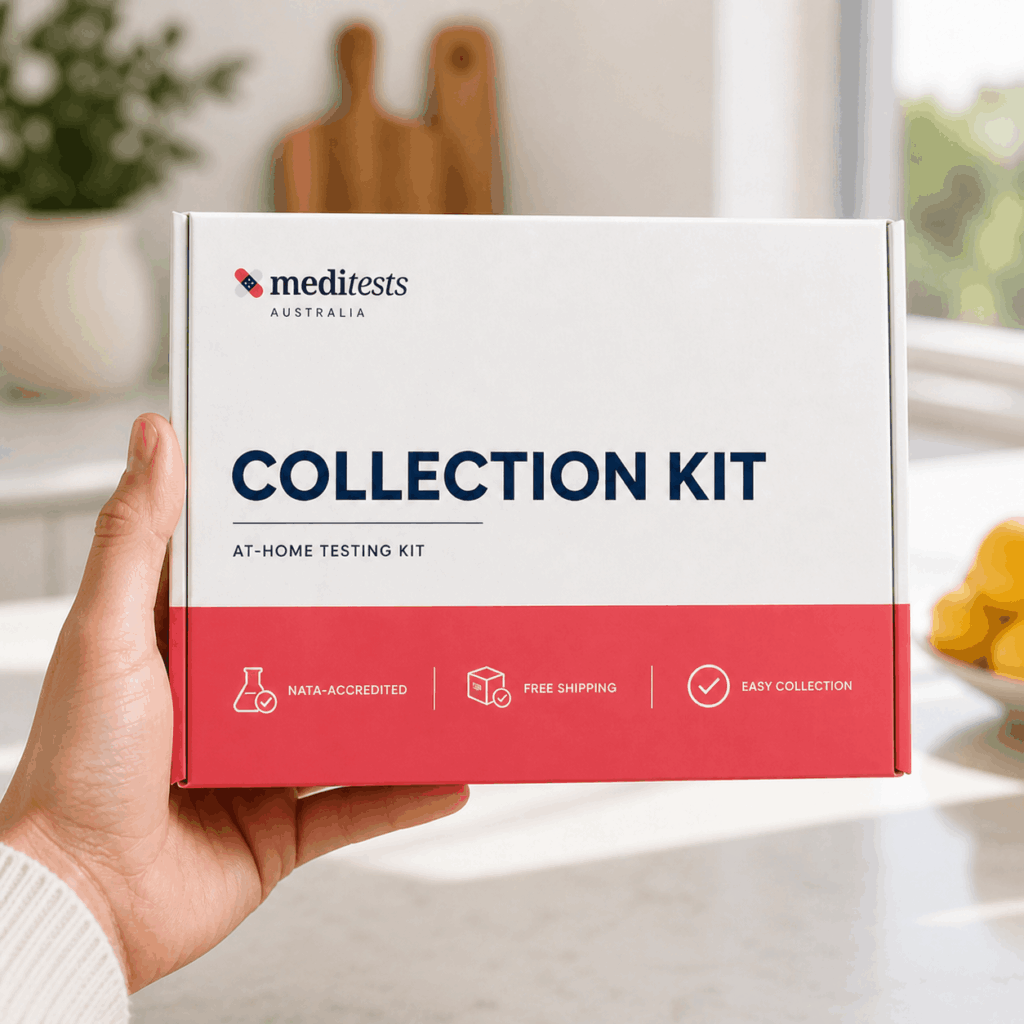
Everything included. Kit, prepaid return, DNA-based analysis of 80+ markers and your full report.
Special offer this monthA free consult with our doctor to discuss your results, what they mean and what’s next. Completely optional.
Trusted by 2,000+ Australians
How it works
Get your kit online, collect your own sample at home and post it back. No GP referral, no clinic, no appointment.

Get your at-home test kit in minutes. No appointment or referral needed to order a kit from us.

Delivered in plain packaging within 1 to 3 business days, with the collection tubes, instructions and prepaid return included. A small stool sample takes 5 to 10 minutes to collect, then post it back.

Your report is sent directly to you, typically within 7 to 10 business days of the laboratory receiving your sample.
Your gut affects far more than digestion. This is the test that shows you what’s living in it, what’s missing and how well it’s working, so you can fix the actual problem instead of guessing at it.
Good bacteria, bad bacteria, yeasts, parasites, worms and viruses. One stool sample, analysed by DNA, and you get the full picture with amounts. Not a guess, not a partial list.
The hidden culprits a standard stool test doesn’t look for. H. pylori, Candida overgrowth, Blastocystis, Giardia, worms and bacterial overgrowths. If one of these is behind your symptoms, this is the test that finds it and names it.
Your gut bacteria are supposed to make butyrate. It’s what keeps your gut lining strong and calm. This test measures it directly, along with the other short chain fatty acids, and shows you which beneficial bacteria are low and need building back up.
Digesting properly, defending itself, inflamed or not. Pancreatic elastase shows whether you’re breaking food down, secretory IgA shows whether your gut’s immune defences are holding, and calprotectin shows whether there’s inflammation. What’s in there matters. Whether it’s working matters more.
Every result charted against a healthy range. Anything out of balance is flagged and explained in the laboratory’s own commentary, so you finish the report knowing what’s wrong and what to focus on, not searching for what the numbers mean.
Once you know what’s overgrown, what’s missing and what’s inflamed, the fix becomes targeted. The right diet changes, the right support, the right treatment for what’s actually there. No more cutting out foods at random or trying another supplement and hoping.
Six categories and 80+ markers, mapped from one stool sample using DNA-based analysis, so you see what is present, how much of it there is, and how well your gut is actually functioning.
These markers show how your gut is working, not just what lives in it. Enzyme output, immune defence, inflammation and the fuel your bacteria produce from fibre.
A primary signal of active inflammation in the bowel, helping separate everyday upset from something worth a closer look.
Detects hidden blood in the stool that the eye cannot see, an early flag for gut irritation.
Shows how well your pancreas is producing the enzymes needed to break down meals.
Your gut lining's frontline antibody, reflecting how actively your immune system defends the gut barrier.
An enzyme made by certain bacteria that influences how hormones and toxins are recycled through the gut.
Butyrate, acetate and propionate, the fuel your bacteria make from fibre that keeps the gut lining strong.
The microbes that do the useful work. Measuring them shows whether your protective community is intact or has been thinned out by diet, illness or antibiotics.
A keystone microbe linked to a healthy gut lining and metabolic balance.
One of the gut's main anti-inflammatory workhorses and a major butyrate producer.
Friendly bacteria associated with digestion, immune support and a balanced microbiome.
Beneficial bacteria that help maintain gut acidity and crowd out less welcome microbes.
A common commensal that, kept in balance, supports healthy immune development.
A specialist that helps break down dietary oxalates in the gut.
The overall shape of your microbiome. How many species you carry, how evenly they sit, and whether the major families are in proportion.
How many species you carry and how evenly they sit. Greater diversity generally signals a more resilient gut.
The two largest bacterial families, whose ratio describes the overall shape of your microbiome.
Major phyla assessed for balance, with shifts that can point to imbalance.
A methane-producing archaeon that can slow gut transit, contributing to bloating or constipation.
A sulphur-processing microbe linked to gas and gut wall irritation when elevated.
The phylum home to Akkermansia, often associated with a healthy gut barrier.
Organisms that cause trouble directly. Screened from the same sample, including several that routine stool testing only looks for when specifically requested.
Two of the most common causes of food poisoning, screened directly from your sample.
Toxins behind severe gut irritation, often appearing after antibiotics.
The bacterium associated with ulcers and stomach inflammation, with virulence markers.
Strains that can cause significant gut and kidney harm, detected by their toxin genes.
Opportunistic bacteria screened for overgrowth that can tip the gut out of balance.
Norovirus, Rotavirus, Adenovirus and others assessed as part of the panel.
Parasites are a common and frequently missed explanation for long-running digestive symptoms. All of these are screened as standard rather than on request.
A very common gut parasite often connected with bloating, gas and abdominal pain.
A widespread parasite linked to ongoing digestive discomfort and irregular bowels.
A hardy water-borne parasite that causes bloating and loose, greasy stools.
A tiny water-borne parasite that can cause lingering, watery diarrhoea.
A parasite that can trigger significant gut inflammation when present.
Ascaris, Strongyloides, Trichuris, Necator and others screened in one panel.
Yeasts live harmlessly in most guts. Symptoms appear when one overgrows, so these are quantified rather than simply noted as present.
The most common yeast screened for overgrowth that can accompany gut imbalance.
Other Candida yeasts assessed alongside the wider microbial picture.
A common yeast measured as part of the full fungal assessment.
Additional yeasts checked to round out a complete view of your gut.
Marker descriptions are general explanations to help you read your report, not a diagnosis. Microbiome testing reflects your microbial community at the time of sampling and is interpreted alongside your symptoms.
Everything Complete Microbiome Mapping covers, at a glance.
Compare
A standard stool test answers one question quickly and is often exactly the right tool. This panel is built for when that question has been asked and the symptoms have not resolved.
Each organism and marker is reported with its actual level against a reference range, so you can tell an incidental finding from a genuine overgrowth.
The full report is sent directly to you. Keep it, print it, or hand it to your GP, naturopath or dietitian to guide next steps.
Hundreds of Australians have taken control of their health with MediTests.
The referral form was emailed to me immediately, I walked into a collection centre the next morning and my results arrived the very next day. It made me feel they genuinely cared.
Ordered the test, got the referral letter within 20 minutes. Got the test done on a Saturday and had the results by Sunday evening. Seriously efficient and very quick.
I ordered the tests I wanted online, then dropped into the clinic for the blood draw during my lunch break. By lunchtime the following day my results had been emailed to me.
Absolutely loved that I got to choose what tests I wanted. The process was very simple and my results arrived very quickly. I would definitely use again and recommend to friends and family.
It was easy to choose and purchase the test I needed at a reasonable price and set up the appointment online for the next day. The results were delivered electronically within a day or two.
Easy checkout of the test on the website, easy to get the test done and results came quickly. Good to get an idea of any issues as a prep before seeing the GP.
I got my results back within a few hours, a lot quicker than I was expecting. There were plenty of locations I could go to for my sample. Highly recommend.
A reliable method to get a test done without the doctor's prescription. The whole thing was easy to organise and I would happily use it again.
Very efficient and convenient from start to finish. Exactly the kind of easy, no-fuss service I was hoping for.
The ease of the whole experience, and the quick turnaround with results. Exactly what I was after.
Everything you need, in a single order.
Your complete gut microbiome map from one at-home stool sample, with 80+ markers, and your full laboratory report.
Posted to you in plain packaging
Included in the box, nothing to pay
At a NATA-accredited Australian laboratory
Sent directly to you
Anything outside range is highlighted
Get your kit, no appointment
A gut microbiome test analyses a stool sample to show which bacteria, fungi, parasites and viruses live in your gut, how diverse and balanced your microbiome is, and how well your gut is functioning. Complete Microbiome Mapping reads over 80 markers, including gut function markers such as calprotectin, secretory IgA, pancreatic elastase and short chain fatty acids, so you understand both what is in your gut and how it is working.
Anyone with bloating, IBS-like symptoms, food intolerances, reflux, alternating constipation and diarrhoea, unexplained skin issues, brain fog or fatigue, particularly where standard testing has not explained it. It also suits anyone who simply wants a clear baseline of their gut health, or who is rebuilding after a course of antibiotics or a gut infection.
Complete Microbiome Mapping is $599.00, currently reduced from $750.00. That single price covers the at-home collection kit, prepaid return postage, DNA-based analysis of over 80 markers, and your full report.
You collect it yourself at home using the kit provided. It takes 5 to 10 minutes, full step-by-step instructions come with the kit, and it posts back in the prepaid return mailer. There is no clinic visit and no appointment. Your kit arrives in plain, unbranded packaging.
Your detailed report is sent directly to you, typically within 7 to 10 business days of the laboratory receiving your sample. You can read it yourself or share it with your GP, naturopath or dietitian to guide next steps.
A standard stool test usually looks for one specific infection. Complete Microbiome Mapping uses DNA analysis to map your whole microbial community and gut function markers in one go, including organisms routine testing often misses such as H. pylori, Candida, Blastocystis and Dientamoeba.
You don't need one. It is a self-requested at-home test kit, so you can get your kit without a referral or appointment.
Results outside the reference range are flagged clearly on your report, so anything that needs follow up is easy to spot and take to your GP. Some organisms screened by this panel, including Salmonella, Campylobacter, Giardia and Cryptosporidium, are notifiable pathogens, which means the laboratory is legally required to report a positive result to the relevant Department of Health.
On its own, it is not a diagnosis. Microbiome testing reflects the composition of your microbial community at the time of sampling. It is not a standalone diagnostic tool, and results are interpreted alongside your symptoms and any examination by your treating practitioner.

One stool sample, collected at home, and a complete map of your microbiome and gut function in a single report.
Get my Gut Microbiome At Home Test Kit →MediTests is a private, self-requested pathology service. The sample is self-collected at home and analysed by a specialist Australian laboratory. Microbiome testing reflects the composition of microbial communities at the time of sampling and is not a standalone diagnostic tool for infection or disease. Certain organisms are notifiable pathogens and positive results are reported to the relevant Department of Health in accordance with statutory requirements. Results are intended to support, not replace, the advice of your treating doctor, and may lead to further investigation. ABN 70 686 814 951.
Unlock coupon
Get 10% off your first blood test
Get updates on our new blood panels and join the community.
Please enter a valid email address.
Unlock coupon
Get 10% off your first at-home test kit
Collected at home, posted back, results to your inbox. No clinic visit needed.
Please enter a valid email address.